



The 3rd Sustainability Forum of Shanghai Jiao Tong University Explores New Paradigm for Sustainability and AI Integration 2026-03-21

The 3rd Sustainability Forum of Shanghai Jiao Tong University was held on March 19 at the university’s Xuhui Campus.Under the theme “New Paradigm for Integrated Development of Sustainability and Artificial Intelligence,” the forum brought together experts, scholars and representatives from government agencies, international organizations, universities, industrial sectors and investment circles. Participants held in-depth discussions on cutting-edge topics including ESG practices, artificial intelligence governance, energy transition and global sustainable development, with the aim of pooling cross-sectoral wisdom to explore innovative pathways and practical solutions for sustainable transformation in the AI era.

Cheng Peng, Secretary of the Party Committee of the Shanghai Municipal Commission of Economy and Informatization; Zeng Xiaoqin, Vice President of Shanghai Jiao Tong University; and Zhang Wei, Assistant Representative of the United Nations Development Programme (UNDP) China Office, addressed the opening ceremony.

Cheng Peng noted that sustainable development has been prioritized in urban development, and the coordinated digital and green transformation of the manufacturing sector has been pressed ahead. Efforts have been made to vigorously develop new energy storage and green fuels, and steadily advance energy conservation and carbon reduction in industry as well as the construction of zero-carbon industrial parks. He expressed hope that all parties will join hands to strengthen innovation-driven development, deepen scenario-based applications, foster a collaborative environment, and forge a high-quality development path that integrates high-end manufacturing and green development.
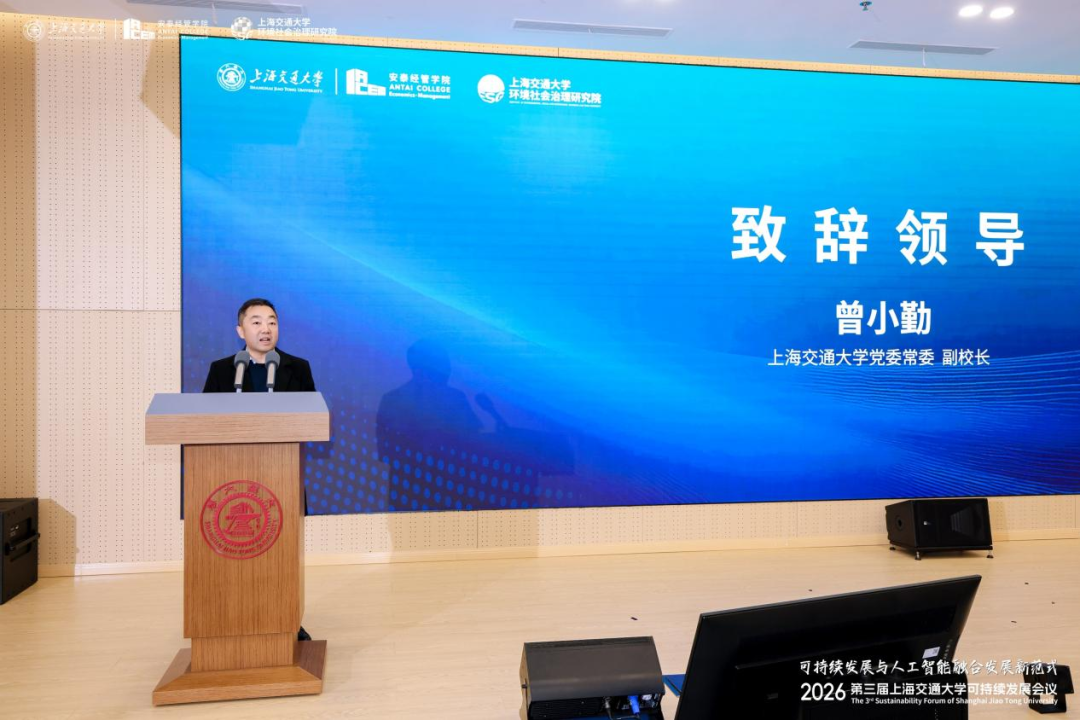
Vice President Zeng Xiaoqin pointed out that facing global challenges such as climate change and the AI-driven scientific and technological revolution, the integration of sustainability and artificial intelligence is more than a simple combination of technologies. It breaks down disciplinary barriers and gives birth to systematic solutions to complex global issues. He added that the establishment of the SJTU ESG Research Institute has integrated multidisciplinary strengths to translate cutting-edge research into practical solutions, tackle key challenges in building a zero-carbon power grids, and cultivate interdisciplinary composite talents. He called on all attendees to hold pragmatic dialogues on AI-driven sustainable development, discuss ethical and governance issues, build an open and inclusive ecosystem, and jointly explore a new vision for integrated development.

Zhang Wei emphasized that ESG capacity has evolved from a risk management tool into a core “soft power” for Chinese enterprises to compete globally. Driven by international frameworks such as the CSDDD, GRI and ISSB, sustainability compliance has shifted from a “soft constraint” to a “hard market access requirement.” She noted that artificial intelligence, as critical infrastructure connecting ESG data and international standards, is helping Chinese enterprises gain global competitiveness through compliance, transparency and long-term value creation.
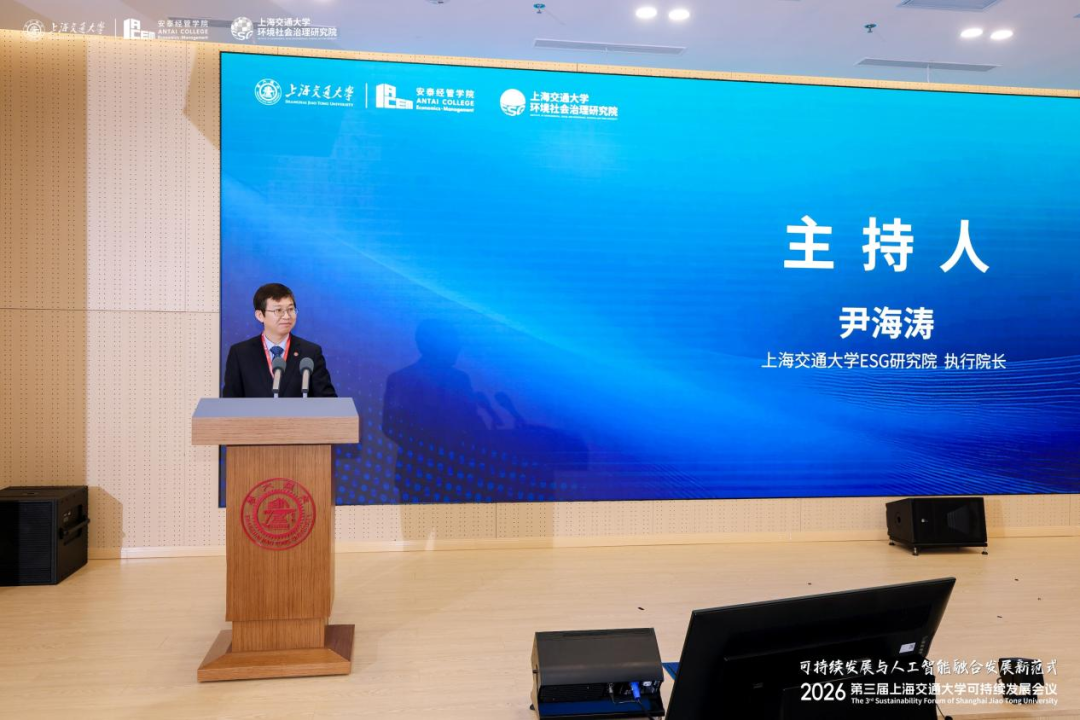
Yin Haitao, Executive Dean of the ESG Research Institute of Shanghai Jiao Tong University, presided over the forum.


A landmark research report, Consensus and Divergence in ESG Rating in China, was officially launched at the forum. Song Zhigang, Associate Researcher at the SJTU ESG Research Institute, interpreted the report in detail. Unlike mature credit rating systems that feature high standardization and low divergence, ESG rating divergence has become a common trend across the global industry. The report shows that more than 75% of listed companies in the sample recorded moderate or high levels of rating divergence. It systematically analyzes the features, root causes and impacts of ESG rating divergence among Chinese listed companies, and calls on ESG rating agencies to improve the transparency of their methodologies to reduce divergence and build greater industrial consensus.


Zhu Qinghua, Chief Scientist of the SJTU ESG Research Institute and Vice Dean of Antai College of Economics & Management, introduced and announced the official launch of the ESG AI Research Initiative. CRRC Asset Management Co., Ltd., KPS Technology and Chamwion Tech joined as key industry partners for the initiative. The launch was witnessed by Yin Haitao, Jiang Wenning, Secretary of the Party Committee of Antai College of Economics & Management, and Sang Dawei, Vice Dean of Antai College of Economics & Management. The initiative aims to promote cross-disciplinary integration of ESG and artificial intelligence, drive industry-university-research-application collaborative innovation, and contribute to global sustainable development transition and technological progress.


Launching ceremony for the Zero-Carbon Power Grid Alliance Cooperation was held during the forum. Ma Longfei, CEO of Green Alpha Capital, introduced the background and development vision of the alliance, which focuses on zero-carbon power grid technology research and development, industrial application and ecosystem building to inject new momentum into the green energy transition. The SJTU ESG Research Institute and Green Alpha Capital jointly initiated the alliance, with Jiang Wenning and Chen Xiaomin, Chairman of Green Alpha Fund, witnessing the ceremony.
Keynote Speeches

Chen Qiyan, Founder and CEO of DaoCloud, delivered a keynote speech entitled “Data-Computing-Energy-Network Integration Driving Sustainable AI Development – Chinese Wisdom for Energy Transition.” He elaborated on the transformative logic from the digital “Trinity” to the intelligent “Data-Computing-Energy-Network Integration” in the AI era, analyzed the inherent links between data, energy and computing power, and shared a new ecosystem of decentralized and autonomous AI infrastructure featuring integrated collaboration of data networks, computing networks and energy networks.

Song Haitao, Dean of Shanghai Artificial Intelligence Institute, Shanghai Jiao Tong University, delivered a speech on “Global Governance and Innovative Applications of Artificial Intelligence.” He shared insights on the overall landscape of global AI governance, international multilateral mechanisms, and innovative applications of artificial intelligence in fields such as embodied intelligence.
Panel Discussion

A panel discussion themed “AI Development Empowering Global Sustainable Transformation” was held during the forum. Kong Ling, Founder and CEO of Chamwion Tech and Distinguished Researcher at the SJTU ESG Research Institute, moderated the session.
Panelists included Chen Qiyan, Founder and CEO of DaoCloud; Liu Yadong, Executive Dean of the School of Electrical Engineering, Shanghai Jiao Tong University; Tang Jinghua, Chairman of Shanghai Voicecomm Information Technology Co. Ltd.; and Wu Zhengxiao, Head of Cross-Border Synergy Business at the Financial Innovation Headquarters of Shenwan Hongyuan Group. The guests held in-depth discussions on the integration of AI innovation and sustainable development, practical application scenarios and future development trends.
Supporting Activities

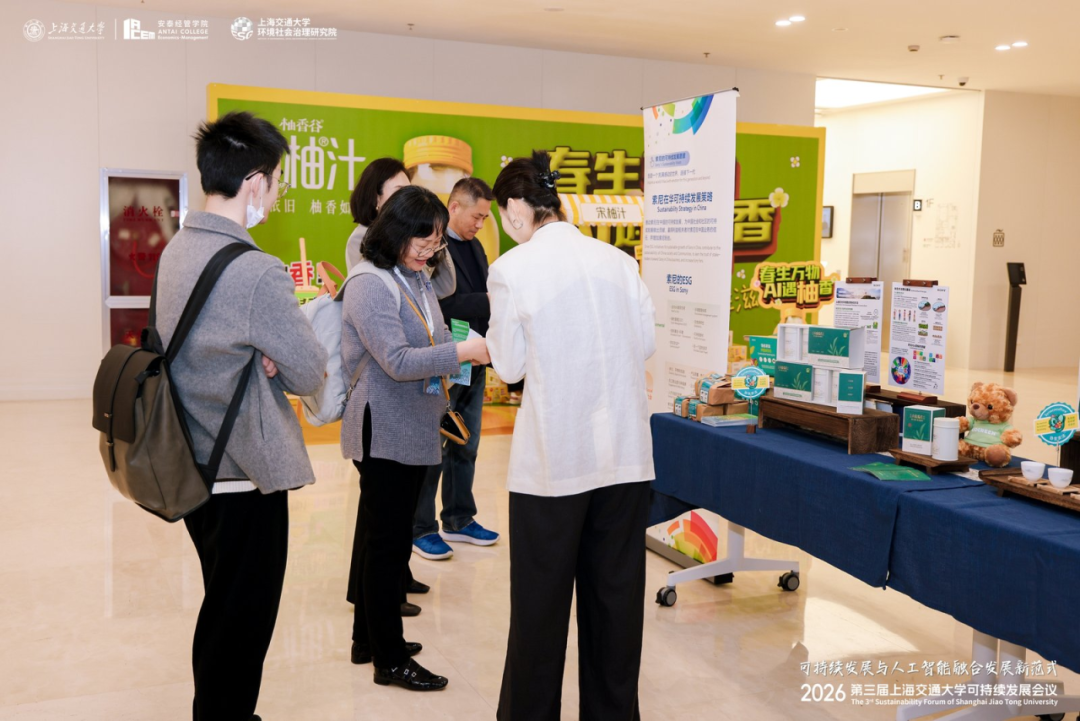
Along with the main forum, a “Meeting Corner” and a “Sustainability Space” were set up as supporting events. Side meetings were held for in-depth cooperation and exchanges, while brand exhibitions and interactive experience sessions covering embodied intelligence, sustainable consumption and other related topics were also arranged to promote industry collaboration and practical cooperation.